Requirements for measuring systems for gaseous fuel used in vehicles
This page outlines the requirements for gaseous fuel measuring systems for compressed or liquid gas (e.g. CNG or LNG) both before putting into use and in service.
The requirements apply to measurement systems used in trade to determine the price or other economic benefit of a product or service on the basis of the measurement result. The requirements are based on the Measuring Instruments Act (707/2011).
Conformity assessment of the measuring system is the responsibility of the manufacturer. It is the responsibility of the operator to commission a compliant measuring system and to ensure the measuring system is verified while in use.
Conformity assessment before putting into use
Measuring systems for liquefied methane (LNG, LBG etc) used as fuel
Measurement systems for liquefied methane and other liquid fuels, such as fuel dispensers, must comply with the requirements of the Measuring Instruments Directive MID (2014/32/EU), if their results are used as the basis for payment. The same requirements apply to all liquid fuel measuring systems.
The manufacturer must demonstrate the conformity of the measuring system before it is made available on the market and put into use. The manufacturer may choose the conformity assessment methods for their production of the possible choices set in the MID.
As an example, a simple EU type examination (module B) is insufficient on its own to demonstrate conformity. It must be accompanied by either quality assurance of the manufacturer’s production process (module D) or conformity to type based on product verification (module F). For all modules, the manufacturer must use a notified body for the conformity assessment.
Possible procedures for conformity assessment:
B+D: EU type examination and quality assurance of the production process B+F: EU type examination and conformity to type based on product verification G: Conformity based on unit verification H1: Conformity based on full quality assurance plus design examination
Once the conformity assessment for the measuring system has been carried out, the manufacturer signs a declaration of conformity, which describes the conformity and the justification thereof. The measurement system must be marked in accordance with the Measuring Instruments Directive. The measuring system must include the identifier of the notified body involved in the conformity assessment, such as D, F, G or H1 module.
Notified bodies can be found in the EU’s Nando database.
Figure 1. Conformity marking of the MID consisting of the CE marking and supplementary metrology marking. The marking includes the year of manufacture and the identification number of the notified body.
The essential requirements for measurement systems are described in Annexes I and VII (MI-005) of the MID. The standard used for assessment of the technical requirements is OIML recommendation OIML R 117 Dynamic measuring systems for liquids other than water.
Measuring systems for compressed gas (CNG, CBG, hydrogen etc) used as fuel
Measuring systems put into use before 10 October 2028
Measuring systems for compressed gas fuel dispensers must have a Finnish type rating, which must be verified before putting into use. The type approval and initial verification must be carried out by a Tukes-approved inspection body.
Label for the Finnish type approval: VJ.K.XX.YY (XX is a serial number, YY are the last two digits of the year of approval)
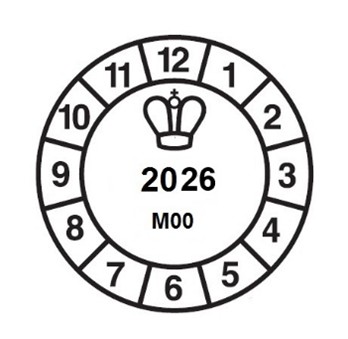
Figure 2. Verification marking. The marking indicates the time of the verification to the month and the inspection body.
The technical requirements for the type approval and initial verification are that of OIML recommendation OIML R 139 Compressed gaseous fuel measuring systems for vehicles.
The Finnish type approval can be granted based on a OIML R 139-compliant test report that has been issued elsewhere.
Measuring systems put into use after 10 October 2028
After the amendment (2026/706/EU) to the Measuring Instruments Directive is applied, the requirements for measuring systems for compressed gas dispensers are also set in the MID.
Measuring systems for compressed gas dispensers that are put on the market after 10 October 2028 must meet the requirements of the Measuring Instruments Directive. Conformity assessment must be carried out under the same procedures and modules as liquid fuel systems.
Measuring systems that have a Finnish type approval granted before 10 October 2028 may continue to be installed and put into use until 10 April 2030.
The essential requirements are described in Annexes I and VIIa (MI-012) of the MID. The standard used for assessment of the technical requirements is OIML recommendation OIML R 139 Compressed gaseous fuel measuring systems for vehicles.
In-service verification
While in service, measuring systems for liquified or compressed gas dispensers must be verified at an interval of two years. Verifications must be carried out by a Tukes-approved inspection body. It is the operator’s responsibility to ensure that the verification of the measuring system is valid while in use.
After the verification is approved, the measuring system is marked with a verification marking described in Figure 2. A certificate of the verification will also be issued.
Measuring Instruments Act (707/2011) Government Decree on Measuring Instruments (471/2014) Decree on the Measuring Instruments Directive (1432/2016) Measuring Instruments Directive (2014/32/EU) as amended (2026/706/EU)
See also
Standards
OIML R 117:2019 Dynamic measuring systems for liquids other than water OIML R 139:2018 Compressed gaseous fuel measuring systems for vehicles